IHOPE and SAA initiatives on climate change threats
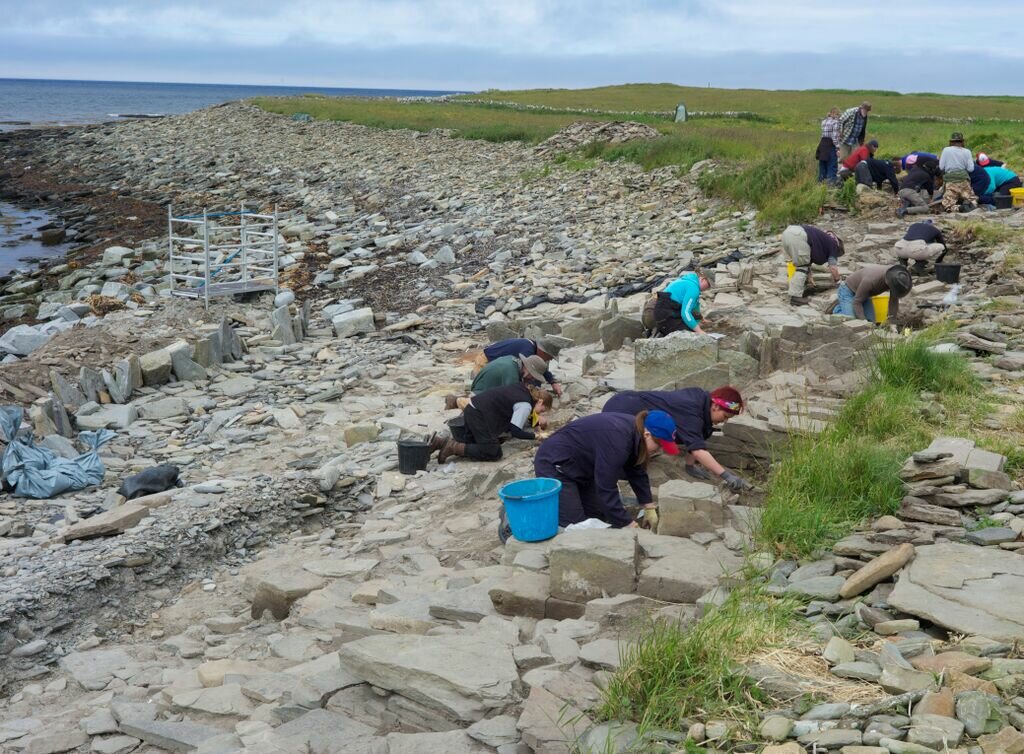
In the past two years the loss of archaeological sites and degradation of organic preservation in once-frozen deposits has become increasingly recognized as a major aspect of climate change in the north. Increased storminess in many parts of the circumpolar north and rising soil temperatures "defrost" deposits once rich in preserved organic materials to provide a combination of unprecedented threats to both heritage and science. In the north slope of Alaska major stratified sites representing thousands of years of human occupation are being totally washed away in single storm events. A recent large scale survey project of Norse sites and middens in SW Greenland found surviving organic preservation in only three of 90 sites investigated - work on some of these same sites in the 1960's-1980's encountered excellent preservation of bone, hair, feathers, cloth and other perishable organic finds. In Orkney major previously unknown Neolithic monuments are being revealed by one storm and destroyed by the next as scientists and local residents scramble to document the new finds (see photo- credit Julie Bond U Bradford).We are losing evidence at an unprecedented rate, and this generation may be the last to be able to organize any effective response.
These rapid changes are producing a deadly threat to both northern heritage and the scientific record, and national and international groups are mobilizing to organize responses and to alert the science and policy communities to an imminent threat to irreplaceable resources. There is an urgent need to share expertise and best practice response strategies, to engage and involve the public, and to place rescue work high in the agendas of national and international funding agencies. Arctic Horizons can play a key role in formulating responses and identifying collaborators and allies.
In 2015, two groups have coalesced to raise awareness and provide connections among the many concerned stakeholders. The IHOPE (Integrated History and Future of Humans on Earth) group Threats to Heritage and the Distributed Observing Network of the Past was formed in June 2015. The formulation describing archaeological sites as part of a “distributed observing network of the past” (DONOP for short) has been effective in highlighting the role of aDNA, stable isotopes and related analyses in allowing reconstruction of past biogeography, climate, and food web structures that provide points of engagment with natural and physical scientists. These “hard science” communities have been strongly supportive of our initial presentations, with support from directors of Future Earth and participants in the recent Arctic Observing Network Open Science meeting. IHOPE Team members made presentations at the recent Paris Climate conference, at INQUA (Nagoya), AGU, and similar international meetings in Sweden, Iceland, Ireland, and the UK.
Here is a quote from the IHOPE website (http://ihopenet.org/global-environmental-change-threats-to-heritage-and-...) which will be updated with new information on activities and links.
“The past decade has seen growing world-wide concern for the accelerating impact of environmental change on heritage at the global scale. Sites and structures that have endured for centuries and millennia are being swept away in increasing numbers around the world. Once destroyed, these resources are gone forever with irrevocable impact on human heritage and archives of scientific data. Unlike damage caused by human action, there is no recourse to “developer pays” strategies for mitigation where wind, ocean, and rising soil temperatures impact thousands of sites at once. The American Anthropological Association’s Global Climate Change Task Force’s official report Statement on Humanity and Climate Change is representative of current international scholarly expressions of urgent concern. As organizations and communities have mobilized to respond, two intertwined concerns have energized scholars and citizens and form the basis for this IHOPE
Theme:
- Loss of key elements of cultural heritage, both major historic sites of established great social and economic value to local and global communities and previously unknown sites often undocumented before becoming exposed and rapidly damaged by environmental change (Harvey & Perry 2015).
- Loss of the rich environmental and cultural record represented by sites with rich organic preservation that are now being mobilized as a “distributed long term observing network of the past” through new techniques including ancient DNA and a wide range of stable isotopes now being applied to large, well-studied zooarchaeological collections spanning millennia. Major resources for understanding long term variability in key economic species (cod, salmon, domestic stock, insects, crops, and weeds) and past adaptation to climate change are being destroyed just as their full potential for global change science is being realized.”
Also in 2015, the Society for American Archaeology created a standing Committee on Climate Change Strategies and Archaeological Resources (CCSAR) chaired by Dan Sandweiss and Tom McGovern. This committee has been charged with helping to coordinate an SAA response to these threats, and it will work closely with the international IHOPE team and related science and heritage groups. This is a large, urgent problem that is thankfully now attracting wide concern. Many new and established teams and organizations are mobilizing, and a challenge will be to effectively coordinate our responses, recruit experts within and outside the disciplinary scientific community (most definitely including bearers of local and traditional knowledge) and find significant new funding resources to support a coordinated response on the national and international scale. This will be a big job needing many hands and heads together. We need your help!
Arctic Horizons thus comes at a critical moment for northern archaeology, circumpolar heritage, and global environmental science. The Arctic Horizons meetings can provide key elements in a response strategy and help NSF formulate policy and identify funding resources to respond. Let’s make the most of the opportunity!