Advisory Board
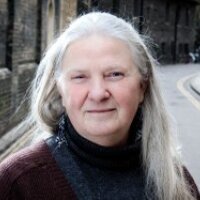
‘Fourth World’ politics (environmental and other); anthropology and economic relations; names and naming; grass-roots organisational processes; decision-making; gender; temporary communities of knowledge: science and other expertises. The Arctic (north Alaska); Mexico (Oaxaca; Michoacan)
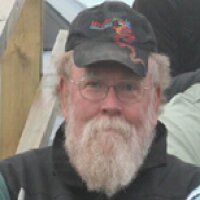
Tom McGovern has done archaeological fieldwork since 1972 in the UK, Norway, France, the Caribbean, and NE US, but his main research work has been in the North Atlantic (Greenland, Iceland, Faeroes, and Shetland). McGovern was one of the founders of the North Atlantic Biocultural Organization (NABO, www.nabohome.org) with initial NSF support in 1992, and has served as NABO coordinator down to the present. This international regional research cooperative has sponsored collaborative science, education, and outreach work from arctic Norway to Labrador, and its website now provides rich resources for science and education. In 2009 NABO was funded by NSF to explore the possibilities of taking this collaborative model global by connecting other regional interdisciplinary teams working in long term human ecodynamics. Following a successful workshop and conference publication, this effort has resulted in the new Global Human Ecodynamics Alliance (GHEA, www.gheahome.org) that has attracted wide interest and NSF support through the new Science Engineering and Education for Sustainability (SEES) initiative. McGovern is active in the GHEA alliance, linked to IGBP human dimensions initiatives and working to coordinate and connect many excellent local and regional initiatives in sustainability education and research. In 2010, the NABO teams were recognized by the American Anthropological Association's Gordon Willey Memorial Prize for outstanding interdisciplinary archaeology. McGovern is associate director of the Human Ecodynamics Research Center at the CUNY Graduate Center (http://herc.gc.cuny.edu/ ) and has served on multiple NSF and international panels on arctic and interdisciplinary research. McGovern is a chair of the Society for American Archaeology Committee for Climate Change Strategies and Archaeological Resources and the Integrated History and Future of People on Earth (IHOPE http://ihopenet.org) Circumpolar Networks and Threats to Heritage and the Distributed Observing Networks of the Past groups.

Senior Director, Community & Government Affairs Optimizes the advocacy efforts between the Northwest Arctic Borough, Maniilaq Association, the Northwest Arctic Borough School District, the NANA region villages, other local entities and the State and federal government.
Kohler applies method and theory from the study of complex adaptive systems to the study of prehistoric societies
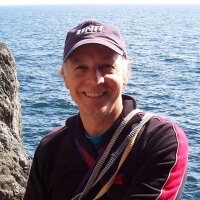
Professor of Sociology and Senior Fellow, Carsey Institute,
The Arctic, human dimensions of climatic change, environmental sociology, statistics and data analysis
http://pubpages.unh.edu/~lch/
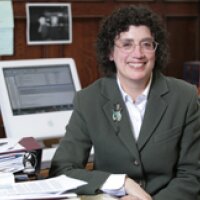
Susan A. Kaplan is a professor of anthropology and director of the Peary-MacMillan Arctic Museum and Arctic Studies Center at Bowdoin College. She is an Arctic anthropologist and archaeologist. Her work covers three areas of northern research. She studies prehistoric and historic Inuit responses to environmental change and contact with the West using archaeology, ethnohistory, visual anthropology, and paleoenvironmental data. Most of that work has taken place in northern Labrador, Canada. She studies the history of Arctic exploration using many of the same investigative tools, and that work has taken her to Ellesmere Island, Labrador, and Newfoundland and into many archives. Finally, she studies material culture and uses museum collections to develop exhibitions for the public and to reach out to the northern communities from which artifacts were collected and photographs and films were taken.
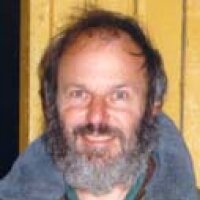
F. Stuart Chapin, III (Terry) is an ecosystem ecologist whose research addresses the sustainability of ecosystems and human communities in a rapidly changing planet. This work emphasizes the impacts of climate change on Alaskan ecology, subsistence resources, and indigenous communities, as a basis for developing climate-change adaptation plans.
Henry is a Polar scientist and an Arctic researcher based in Eagle River, Alaska. Through his extensive research, he has gained an in-depth understanding of the relations between people and their environment. Experienced in issues of importance to the Arctic, Henry received his Ph.D. in Polar Studies from the Scott Polar Research Institute at the University of Cambridge (UK). He joined the Pew Environment Group in 2009 as the Science Director for the Arctic Program.
Henry’s research has looked primarily at interactions between people and their environment, including the impacts of climate change, patterns and practices of subsistence, traditional ecological knowledge and conservation. Much of Henry’s research involves the residents and communities of the Arctic and has been part of many Arctic and Antarctic excursions. These trips include taking a small boat across 650 miles of the Arctic coast, traveling by dog team through the Arctic National Wildlife Refuge and climbing the highest peak in Antarctica.
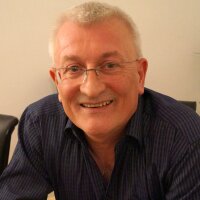
Peter Schweitzer is Professor at the Department of Social and Cultural Anthropology at the University of Vienna and Professor Emeritus at the University of Alaska Fairbanks. His theoretical interests range from kinship and identity politics to human-environmental interactions, including the community effects of global climate change, and his regional focus areas include the circumpolar North and the former Soviet Union. Schweitzer is past president of the International Arctic Social Sciences Association, and past chair of the Social and Human Sciences Working Group of the International Arctic Science Committee (IASC).
He is the editor of Dividends of Kinship (Routledge 2000), co-editor of Hunters and Gatherers in the Modern World (Berghahn 2000), Arctic Social Indicators (Nordic Council of Ministers 2010), and Arctic Social Indicators II: Implementation (Nordic Council of Ministers 2014), and co-author of Russian Old-Settlers of Siberia (Novoe izdatel'stvo 2004; in Russian).
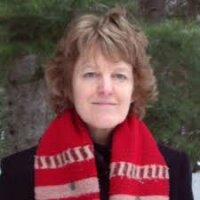
Dr. Fondahl's research focuses on cultural and legal geographies of indigenous land rights and claims, and land-based traditional activiteis in the Russian North; on the cultural, legal and historical geographies of First Nations in northern British Columbia; and monitoring human development in the Arctic/Circumpolar North.

Nikoosh Carlo is Senior Advisor to the Chair of the Senior Arctic Officials at U.S. Department of State.
Steering Committee

Sveta Yamin-Pasternak is a cultural anthropologist, whose research in Alaska and Russian Far East explores connections between foodways, built environment, climate, and aesthetics. She teaches at the University of Alaska Fairbanks Department of Anthropology and the Kuskokwim Campus Ethnobotany Program. The research program that she leads at the Institute of Northern Engineering engages a wide range of community collaborators and colleagues in the fields of humanities, biological sciences, engineering, and architecture.

(Ph.D. University of Virginia) is president of the Jefferson Institute. He is a political economist specializing in issues of banking and telecommunications regulatory transition, and the evolving world of information and participatory politics. In addition to scholarly works and popular opinion pieces, he has written on the business and political environment of Europe for the Economist Intelligence Unit, the United Nations Development Program (UNDP), and numerous private and governmental organizations in Europe and the United States.
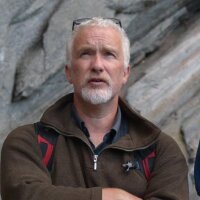
(M.A. University of Michigan), deputy director of Brown University’s Haffenreffer Museum of Anthropology, is an archaeologist interested in complex societies, state formation, and the integration of domestic and political economies. His research has focused, for the past 30 years, on Iceland and the North Atlantic, where he is interested in understanding the dynamic processes that led to the formation of Iceland’s Viking Age society and, eventually, the creation of a short-lived independent Icelandic state and its rapid absorption into the expanding Norwegian state. He has also worked in Alaska, Scotland, and temperate North America, publishing on Paleoindians, complex hunter-gatherer societies, ritual, and issues of scale and perception in the archaeological record, and the archaeologies of law and fear.
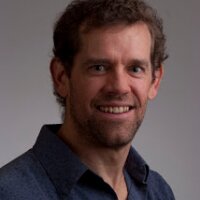
(Ph.D. University of Washington) is Affiliate Research Faculty at Portland State University. He is a zooarchaeologist, primarily interested in studying biogeography and historical ecology of North Pacific marine ecosystems, and how changes in each of these has or has not influenced, or been influenced by, prehistoric human hunting practices. To study these complex systems, he spends nearly equal amounts of time working with modern and ancient bone and tooth samples.

(PhD, University of Alaska Fairbanks) is a Research Associate Professor in the Institute of Arctic Biology and Center of Alaska Native Health Research at the University of Alaska Fairbanks. Her research primarily focuses on understanding indigenous community resilience and adaptation and the intersections between culture, health and wellbeing. She is trained in the social and behavioral sciences with specific expertise in the translation of American Indian and Alaska Native indigenous knowledge and practice into health interventions to reduce disparities in substance misuse and suicide. She is currently PI of several federal grants that focus on utilizing community-based, participatory and indigenous research methodologies to promote resilience and strength-based strategies for wellbeing in American Indian and Alaska Native communities.
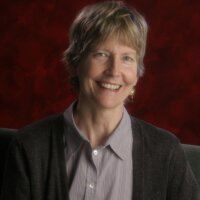
(Ph.D. University of Washington) is a professor in the Anthropology Department at Portland State University. Her scholarship studies the long-term dynamic relationships between people and the environment using zooarchaeology, with a particular interest in fisheries. With a geographic focus in northwestern North America, she draws on evolutionary ecology to model predator-prey interactions, while considering how human demography, social and technological variables, and independent paleoenvironmental change affects human subsistence strategies.
(Ph.D. University of Washington) is an Assistant Professor in the Anthropology Department at Portland State University. Her interests include past hunter-gatherer societies, human ecodynamics, evolutionary theory, ceramic technologies, applied archaeology, and archaeology of the Arctic, Subarctic and Pacific Northwest.
(PhD, University of Toronto, Canada and PhD, Herzen University, Russia) is Associate Professor of Geography and ARCTICenter Director at the University of Northern Iowa. Dr. Petrov is an economic and social geographer who specializes in Arctic economy, regional development and post-Soviet society. His current research is focused on regions of the Russian and Canadian North and concerns regional development, spatial organization, and restructuring of peripheral economies. Dr. Petrov leads the Research Coordination Network in Arctic Sustainability (Arctic-FROST). He is also serves as the Chair of the AAG Polar Geography Specialty Group and an IASSA Councilor.